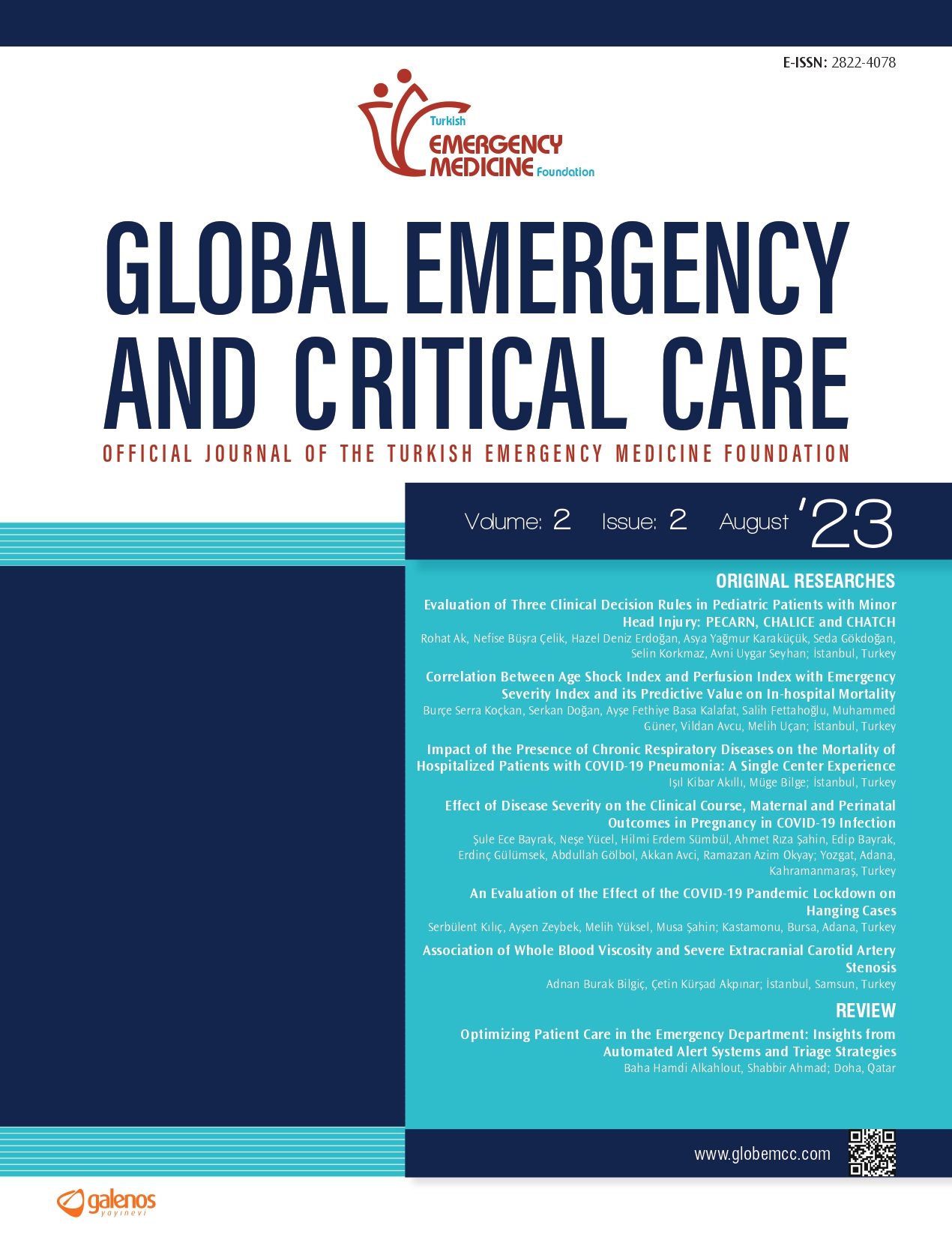
Bilgiç AB, Akpınar ÇK. Association of Whole Blood Viscosity and Severe Extracranial Carotid Artery Stenosis. . 2023 ;2(2):67-70. doi: 10.4274/globecc.galenos.2023.44154.
Bilgiç AB, Akpınar ÇK. Association of Whole Blood Viscosity and Severe Extracranial Carotid Artery Stenosis. . 2023;2(2):67-70. doi: 10.4274/globecc.galenos.2023.44154
Bilgiç, A. B., & Akpınar, Ç. K. (2023). Association of Whole Blood Viscosity and Severe Extracranial Carotid Artery Stenosis. Global Emergency and Critical Care, 2(2), 67-70. https://doi.org/10.4274/globecc.galenos.2023.44154
Bilgiç, A. B., and Ç. K. Akpınar. "Association of Whole Blood Viscosity and Severe Extracranial Carotid Artery Stenosis." Global Emergency and Critical Care, vol. 2, no. 2, 2023, pp. 67-70. https://doi.org/10.4274/globecc.galenos.2023.44154.
Bilgiç, A. B., Ç. K. Akpınar. 2023. "Association of Whole Blood Viscosity and Severe Extracranial Carotid Artery Stenosis." Global Emergency and Critical Care 2, no. 2: 67-70. https://doi.org/10.4274/globecc.galenos.2023.44154.